


Medical Marijuana DUIs in Phoenix
Table of Contents
Defenses exist for MEDICAL MARIJUANA DUI cases which do not exist for ALCOHOL DUI cases. If you or a loved one is facing a MEDICAL MARIJUANA DUI call now to discuss these defenses.
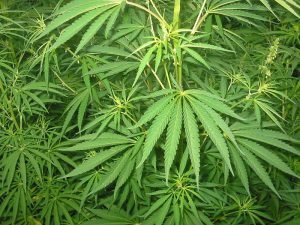
As of today, December 22, 2016, the state of the law with regard to medical marijuana defenses to DUIs in Arizona is rapidly changing because of two legal issues
Last week I tried a Medical Marijuana case to a jury and got a not guilty verdict. Based on that experience as well as the changing status of the law for Medical Marijuana DUI cases I believe there are better defenses for Medical Marijuana DUIs than Alcohol DUIs and so unless the prosecutor makes a good offer or there is something about the facts of the case or the court which makes a worse sentence possible after trial, Medical Marijuana DUIs should go to trial.
In Arizona it is a violation of DUI laws to be driving or in actual physical control of a motor vehicle while impaired by alcohol or drugs, including marijuana. For this charge, 28 A.R.S. § 1381.A.1, it does not matter if the person is legally authorized to drink or use the particular drugs, including marijuana. For drugs there is a second charge of driving with a controlled substance within the body. This charge is 28 A.R.S. § 1381.A.3. If the controlled substance is a federally scheduled prescription drug, such as Xanax, there is an affirmative defense that the defendant is taking the prescription drug as authorized by a legal prescription. As an affirmative defense, the defendant must prove this defense by the standard of a preponderance the evidence, which means more likely than not.
Cases involving Medical Marijuana are different from prescription drugs cases because marijuana is not a federally scheduled prescription drug, and so no health care provider is authorized to issue a prescription for marijuana. Since the defense to having the controlled substance in the body requires a legal prescription and there are no legal prescriptions for marijuana then the affirmative defense of use in accordance with a legal prescription does not exist for marijuana.
In Arizona a health care provider can authorize a person to use marijuana for medical purposes. This an “authorization” and is not a “prescription” and so the affirmative defense to the 28 A.R.S. § 1381.A.3 charge would not seem to apply to medical marijuana users, even though by law they are authorized to use marijuana.
In 2015, in Dobson v. McClennen, 238 Ariz. 389, the Arizona Supreme Court dealt with this issue by holding that if the defendant is authorized to use marijuana for medical purposes (commonly known as a Medical Marijuana Cardholder), then they have an affirmative defense that the concentration of marijuana or active THC or its metabolites in their body while driving or being in actual physical control was below the levels which would case impairment. As the affirmative defense the defendant must prove by by a preponderance of the evidence (more likely than not) that the concentration of the THC or its active metabolites in the defendant’s body was at a level below that which would cause impairment.
Left unsaid in the Dobson case was, what did the defendant actually have to prove, namely, that the level within their body was below the level which would cause impairment for all persons, or only would cause impairment for them individually? This is an important distinction because unlike with alcohol, for which the consensus of scientific experts is that all persons are impaired at an alcohol level of .08%, for marijuana there is no consensus of scientific opinion as to a level of marijuana in the body which would cause impairment for all people. Therefore if the defense means the defendant must prove he is below the concentration which would cause impairment for all people and scientifically there is no such level then how can a medical marijuana user ever prove he or she is below that level (which does not exist)?
Today, December 22, 2016, in the case of Ishak v. McClennen, the Arizona Court of Appeals held that for medical marijuana users the defendant can prove the affirmative defense by testifying that the level within his or her body was not impairing him or her in particular. The court said the defendant did not have to prove the level was below a level which applies to all people, like the .08% alcohol level. Moreover the court held the defendant can do this by testifying about his or her knowledge of how marijuana affects them in particular and so testimony from an expert witness is not required. For defendants this is important because the issue is, are they below the level that causes impairment for they themselves and not for everyone, and they do not need to use an expert witness to prove this point.
Last week before the Ishak decision I had a DUI trial where the judge said my client’s testimony alone that he was not impaired was enough to establish the affirmative defense. After listening to my client describe why he was not impaired the jury found my client Not Guilty.
A second issue which I think is also very important for Medical Marijuana DUI trials is how the law can prevent the State from proving the levels of Marijuana (THC and its metabolites) in the defendant’s blood when the blood sample was obtained. For alcohol DUIs the laws say the State must prove what the defendant’s alcohol level was “within two hours” of driving or being in actual physical control. This is because under 28 A.R.S. § 1381.G, a defendant is presumed to be impaired if their alcohol level is .08% or More “within two hours” of driving or being in actual physical control. Also that a defendant is guilty under 28 A.R.S. § 1381.A.2, if their alcohol level is at or about .08% “within two hours” of driving or being in actual physical control. So for alcohol the law specifically says the State need only prove what the defendant’s alcohol level was “within two hours” and not at the actual time of driving or being in actual physical control. For drugs, such as marijuana, the DUI statutes do not say, “within two hours”.
So for drugs including marijuana, there is no “within two hours” rule, rather the State must show the presence of drugs and if they want to tell the jury about the concentration levels of the drugs in the defendant’s blood, it must be at the time of driving or being in actual physical control, and not “within two hours”. This requirement is as a result of a 1989 Arizona Supreme Court case, Desmond v. Superior Court, 161 Ariz. 572.
With alcohol an expert witness may be able to tell what a person’s alcohol level was at a time earlier than the testing time using a scientific principle known as “retrograde analysis.” A retrograde analysis requires knowledge of such factors as the test results, when the tests were administered or blood sample obtained, when the defendant last drank and ate, and their sex. For example if breath test results of .20% were obtained at 2:00 a.m., with the required knowledge and using a retrograde analysis an expert can possibly say what the defendant’s alcohol level was at 1:00 a.m. However, marijuana is not absorbed in the body the same way alcohol is and because there are many more factors affecting the way marijuana is absorbed into a person’s body, the experts say it is not scientifically possible to do a retrograde analysis for marijuana. So for example if the blood was drawn from a defendant at 2:00 a.m., it is not scientifically possible to testify what the marijuana concentration level was in the defendant’s blood at an earlier time, say 1:00 a.m.
The fact that scientifically it is not possible to do a retrograde analysis for marijuana is very important because under the Desmond case without a retrograde the State may not tell the jury what the concentration levels were in the defendant’s blood at the time blood was drawn. Under Desmond all the State can get into evidence is that the marijuana was present in the defendant’s blood when the blood sample was drawn, and nothing more. This really benefits the defendant because then the jury is left guessing how much marijuana was in the defendant’s body and makes it far less likely the jury will convict the defendant.
For these two reasons, namely, that the defendant is only required to prove that he or she themselves individually were not impaired, without an expert witness, and the State cannot tell the jury what levels of marijuana were in the defendant’s blood, are major aids for medical marijuana holders defending themselves on Medical Marijuana DUIs.
If the past is any guide next year the prosecutors will get the legislature to change the law to establish limits for marijuana like the .08% alcohol level, as well as add levels “within two hours” to the drug statutes, but for the time being, the absence of these changes greatly aids defendants to defend themselves on Medical Marijuana DUIs.
What to Look For When Hiring
A PHOENIX MEDICAL MARIJUANA DUI ATTORNEY
For DUIs in PHOENIX it is important to know that Arizona is Rated Strictest for DUI Penalties.
To minimize the consequences of a Medical Marijuana DUI arrest in PHOENIX it is important to retain a LAWYER FOR A PHOENIX MEDICAL MARIJUANA DUI who is not only knowledgeable and experienced but also one who can anticipate all of the potential consequences which is an important concern for me. PHOENIX MEDICAL MARIJUANA DUIs can be very stressful on not just the person arrested but their families as well.
As a PHOENIX MEDICAL MARIJUANA DUI Lawyer I offer free consultation which can include Chatting about PHOENIX MEDICAL MARIJUANA DUI Defenses, Specific To Your Type Of Situation.
For PHOENIX MEDICAL MARIJUANA DUI cases I offer All Inclusive Flat Fees with no hidden costs or trial fee and affordable payment plans.
primary consideration is what makes someone guilty of a MEDICAL MARIJUANA DUI in PHOENIX and what are possible defenses. Those start with What Are The Legal Grounds For Being Charged With MEDICAL MARIJUANA DUI In PHOENIX?
Defenses can be there was no basis to stop the vehicle in PHOENIX as a recent court case held the Stop of Vehicle Solely for Alleged Excessive White License Plate Light Held Unconstitutional.
Another possible issue is proper legal consent to the blood or urine tests. The Supreme Court has held that the Implied Consent admonitions do not necessarily create valid legal consent to taking the tests.
Another concern people have Is there any way to avoid jail time in PHOENIX for misdemeanor MEDICAL MARIJUANA DUI?
Out Of State DUI Convictions can be used to enhance a DUI sentence although there may be a defense to the use of many out of state convictions.
What Happens if Someone is Found Guilty of
MEDICAL MARIJUANA DUI in PHOENIX
Difference consequences apply to PHOENIX MEDICAL MARIJUANA DUI Cases than other DUI cases, although the license revocation consequence will no longer apply to those who are found guilty of MEDICAL MARIJUANA DUI for offenses which occur after December 31, 2016. Consequences of a conviction can include, jail, counseling, fines, probation, and suspension of the person’s Arizona driver’s license or privilege to drive.
Where do I serve a jail sentence in Maricopa County, where do I serve it?
If a person is find guilty for a PHOENIX MEDICAL MARIJUANA DUI the fines and assessments can be very high and so courts in PHOENIX offer time payment plans.
After a conviction for MEDICAL MARIJUANA DUI in PHOENIX the defendant has to do substance abuse screening and counseling and because I know it is important to minimize all of the consequences for my clients I help them do screening and counseling as easily as possible. The screening and counseling can be done telephonically and online.
MEDICAL MARIJUANA DUIs in PHOENIX have very serious consequences and that is why it is important to retain as quickly as possible a Knowledgeable and Experienced PHOENIX MEDICAL MARIJUANA DUI ATTORNEY like Gordon Thompson, someone who has tried and won a MEDICAL MARIJUANA DUI jury trial.
There are several courts where MEDICAL MARIJUANA DUI and misdemeanor criminal charges are tried in Phoenix. Those courts include the Phoenix Municipal Court and the Agua Fria, Arcadia/ Biltmore, County Meadows, Desert Ridge, Downtown, Dreamy Draw, Encanto, Moon Valley, South Mountain, and West McDowell Justice Courts.