


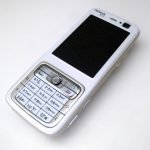
Arizona Supreme Court holds the owner of a cell phone does not lose their privacy expectation in the contents of their cell phone by leaving the phone unlocked in another person’s apartment.
Arizona Supreme Court also held that an overnight guest in another person’s residence does not lose their expectation of privacy in their property found in the apartment even if the guest temporarily leaves the apartment or the other person dies.
On September 12, 2016 in State v. Robin Peoples, No. CR-15-0301-PR, the Arizona Supreme Court upheld a trial court’s order suppressing the use at trial of the contents of the defendant’s cell phone, as well as statements the defendant made after his cell phone was illegally searched. The court did so because the search was made in violation of the defendant’s Fourth Amendment rights. Although not necessary for the decision, the court also held the phone had been illegally searched in violation of the defendant’s Fourth Amendment expectation of privacy as an overnight guest in the deceased’s apartment and therefore the suppression could have been granted for that violation as well.
The facts of the case are, the defendant lived next door to his girlfriend, D.C., in an apartment complex. The defendant frequently spent time at D.C.’s studio apartment. About three months into the relationship, the defendant spent the night at D.C.’s apartment and used his cell phone to film the couple having sex. D.C.’s daughter, who also lived at the complex, found D.C. unresponsive in bed the next morning while the defendant was in the bathroom. The daughter called 911, and the defendant ran from the apartment to direct the paramedics, leaving his cell phone behind. While paramedics were tending to D.C., whom they ultimately pronounced dead, the defendant sought solace at a friend’s upstairs apartment. No one asked the defendant to leave D.C.’s apartment. A police officer came to D.C.’s apartment after D.C. was pronounced dead and looked for information that might identify D.C.’s doctor, hoping the doctor could shed light on D.C.’s recent health and then sign the death certificate. The officer found a “smart” cell phone in the bathroom. Assuming the phone belonged to D.C., the officer turned it on and opened it with a finger swipe to search her contacts (it was not passcode protected). A paused video-image of D.C. on her back in bed, mostly naked, appeared on the screen. The officer pressed “play” and watched part of a video of the defendant having sex with a seemingly unresponsive D.C. Before he watched the video, the officer had been told that the defendant spent the night at the apartment. The defendant the returned to D.C.’s apartment a short time after leaving and asked a second police officer at the door to retrieve his cell phone from the bathroom. According to the defendant, that officer entered the apartment and later returned, handcuffed the defendant, and took him into the defendant’s apartment. The first officer testified he was never told about the defendant’s request for his cell phone. According to the first officer, after viewing the video he detained the defendant in his apartment, read him his Miranda rights, and questioned him about the video. The defendant confirmed that he had sex with D.C. during the early morning hours and filmed it with his phone. The defendant also told the officer that D.C. “probably was [dead]” when they had sex, although he “thought she was breathing” and had heard “her snoring earlier.” The defendant later watched the video with other officers and answered their questions.
The State charged the defendant with necrophilia and two counts of sexual assault.
The defendant made a motion to suppress the contents of the camera (the video) and his statements. The trial court granted the motion to suppress. The State appealed to the Court of Appeals, which reversed the trial court’s order of suppression. The defendant then appealed to the Arizona Supreme Court which in turn reversed the Court of Appeals decision and in doing so reinstated the trial court’s order of suppression.
The Supreme Court said, the primary issue was whether the defendant had a legitimate expectation of privacy in his cell phone or in D.C.’s apartment as an overnight guest at the time of the search. If he did, the State conceded that no exception to the warrant requirement applies to permit the search and therefore the search was made in violation of the Fourth Amendment.
The Arizona Supreme Court said in Riley v. California, 134 S. Ct. 2473(2014), the United States Supreme Court held that since cells phones are essentially their owners’ digital alter egos and contain “a digital record of nearly every aspect of [people’s] lives from the mundane to the intimate” the privacy of which is protected by the Fourth Amendment. Since a cell phone’s contents are protected the police must generally obtain a warrant before searching a cell phone.
The Arizona Court of Appeals in this case found Riley inapplicable because by not having the cell phone within his immediate control when the officer found and searched it the defendant had lost his privacy expectation in the phone’s contents. The Arizona Supreme Court said however the issue is the contents of the phone and not the phone’s location and a person does not lose their expectation of privacy in the phone’s contents if the phone is not in the person’s possession or even if the person chooses not to lock the phone. Since the defendant did not lose his expectation of privacy in his phone by leaving it unlocked in D.C.’s apartment, the warrantless search was in violation of the Fourth Amendment.
The Supreme Court went on to say the Good Faith Exception, under which even if the evidence was obtained in violation of the Fourth Amendment would have allowed the evidence to be used at trial if the police had obtained the evidence with a good faith basis to believe the law and the facts permitted them to obtain the evidence, did not apply. The court declined to apply the Good Faith Exception because it said the officer did not have a good faith basis to believe the phone belonged to D.C. When the officer first viewed the video on the phone the officer could see that D.C. appeared to be unconscious and therefore it was unlikely she was using her phone to make the video. The officer also knew the defendant had been in the apartment and therefore it could have been his phone, however the officer chose not to ask the defendant if the phone was his. Therefore the court said, the officer was not acting with a good faith belief the phone was D.C.’s. Had the officer had a good faith basis to believe the phone was D.C.’s the Good Faith Exception would have applied and the order granting suppression would have been reversed.
The Supreme Court could have decided the issue solely on the expectation of privacy in the cell phone, however, the defendant also sought suppression on the grounds that the cell phone was found in the apartment, where as an overnight guest he had an expectation of privacy in his property found in the apartment, a right which is also protected by the Fourth Amendment. The State argued the defendant lost his expectation of privacy as an overnight guest in the apartment when he left and, if not then, when D.C. , who had given the defendant permission to be in the apartment, had died. The Supreme Court agreed with the defendant’s argument that neither his temporary absence from the apartment nor D.C.’s death terminated his expectation of privacy, as an overnight guest, in his property found in D.C.’s apartment. The court also declined to apply the Good Faith Exception to this issue because the officer knew the defendant had spent time in the apartment, and did not ask him if he had gotten all of his property from the apartment prior to searching the phone.
The case may be found at:
http://www.azcourts.gov/Portals/0/OpinionFiles/Supreme/2016/CR-15-0301-PR.pdf
Gordon Thompson